
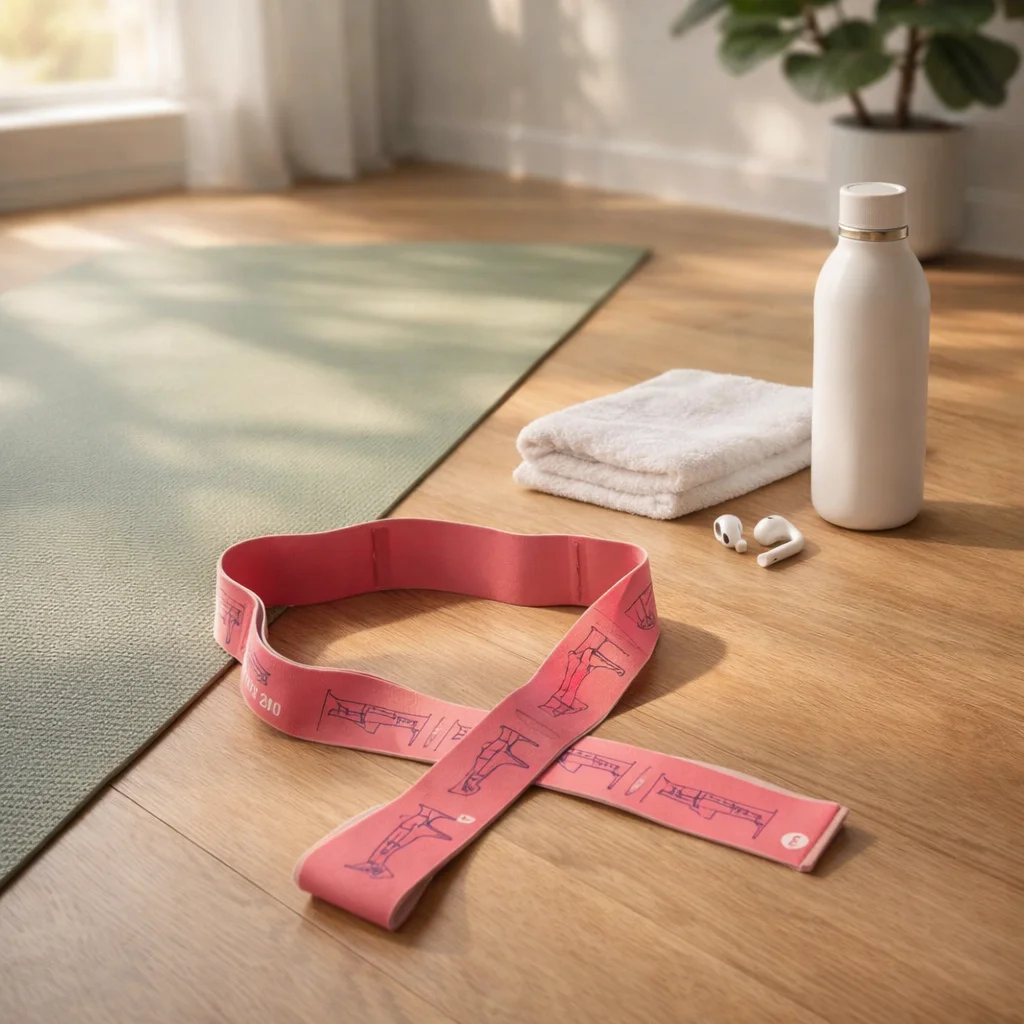
Whether you are just starting your fitness journey or looking to shake up a routine that has grown stale, resistance bands training exercises offer one of the most versatile, accessible, and genuinely effective ways to build strength, improve flexibility, and move better every single day. This guide covers everything you need to know, from the science behind why bands work so well, to step-by-step exercises for every major muscle group, to how to structure a complete weekly program around them.
Why Resistance Bands Actually Work
There is a reason personal trainers, physical therapists, and elite athletes all keep resistance bands in their toolkit. It is not just convenience. The way a band creates tension is fundamentally different from how a dumbbell or barbell does, and that difference matters enormously for how your muscles respond.
The Science of Variable Resistance
When you lift a dumbbell, the resistance stays constant throughout the movement. A band, on the other hand, gets harder to stretch the further you pull it. This is called variable resistance, and it matches something called your strength curve. At the top of a bicep curl, for example, your muscle is actually at its strongest point. A band challenges you most right there, at the peak, where your body can handle it. The result is more complete muscle activation across the full range of motion.
This is not just theory. Research published in sports science journals consistently shows that variable resistance training produces meaningful gains in both strength and muscle size, often comparable to free weight training, especially for beginners and intermediate exercisers.
Why Bands Are Kinder to Your Joints
Heavy free weights put compressive force on your joints, which is fine in moderation but becomes a problem when you are fatigued, recovering from injury, or simply training every day. Bands create tension without that same compression. You can train your shoulders, knees, and hips through their full range of motion with far less risk of aggravating sensitive tissue.
This is why resistance band work is a cornerstone of rehabilitation programs. It is also why people who have been told to "take it easy" on their joints can still train hard and see real results.
The Convenience Factor Is Real
A full set of resistance bands fits in a small bag. You can use them in your living room, at a park, in a hotel room, or in a tiny apartment with no floor space. There is no setup, no rack to load, no spotter required. For people with busy lives, this removes every excuse that usually gets in the way of consistency, and consistency is the single biggest predictor of long-term fitness results.
Expert Tip: The best workout is the one you will actually do. Resistance bands make it dramatically easier to stay consistent because the barrier to starting is almost zero.
Getting Started: What You Need to Know Before Your First Session
Before you jump into your first workout, a few minutes of preparation will make every session safer, more effective, and more enjoyable. This section covers the practical groundwork.
Choosing the Right Band for Each Exercise
Not every exercise calls for the same amount of resistance. Smaller muscle groups like the shoulders and biceps need less tension than larger ones like the glutes and hamstrings. A good starting point is to choose a band that lets you complete 12 to 15 repetitions with good form but makes the last two or three reps genuinely challenging. If you can breeze through 20 reps without any effort, you need more resistance. If your form breaks down after five, you need less.
Loop bands are particularly versatile because you can double them up for more resistance or anchor them at different heights to change the angle of pull. The Stretchly Yoga Resistance Band is a great example of a loop-style band that works across a wide range of exercises, from gentle stretching and Pilates flows to more demanding strength movements.
Warming Up Properly
Jumping straight into heavy resistance training with cold muscles is a recipe for strain and soreness. Spend five to ten minutes raising your heart rate gently before you begin. A brisk walk, light jogging in place, arm circles, and hip rotations all work well. You can even use a lighter band for your warm-up, doing slow, controlled movements that mimic the exercises you are about to perform.
Pay particular attention to the joints you plan to work. If you are doing a lower body session, spend extra time mobilizing your hips and ankles. For an upper body day, loosen up the shoulders and wrists.
Form Fundamentals That Apply to Every Exercise
Good form with resistance bands comes down to a few universal principles. First, control the band on the way back to the starting position. That slow, controlled return (the eccentric phase) is where a huge amount of strength and muscle development happens. Do not let the band snap back. Second, keep tension in the band throughout the entire movement. Allowing it to go completely slack at any point removes the stimulus your muscles need. Third, breathe. Exhale on the effort, inhale on the return.
Key Takeaway: Slow, intentional reps with a resistance band will always outperform fast, sloppy ones. Quality beats quantity every time.
Upper Body Resistance Band Exercises
The upper body responds beautifully to band training. You can hit every major muscle group, from the back and chest to the shoulders, biceps, and triceps, with nothing more than a loop band and a little creativity.
Back and Shoulder Movements
Anchor your band at shoulder height (a door frame, a sturdy pole, or even a heavy piece of furniture works) and perform rows by pulling both ends toward your torso while squeezing your shoulder blades together. This targets the rhomboids and mid-traps, the muscles most responsible for good posture. For the shoulders, try a standing lateral raise by standing on the band and pulling both ends out to your sides until your arms are parallel to the floor.
Face pulls are another underrated gem. Anchor the band at face height and pull it toward your forehead while flaring your elbows out. This movement strengthens the rear deltoids and rotator cuff, which are chronically underworked in most people and critically important for shoulder health.
Chest and Arm Exercises
For the chest, anchor the band behind you and perform a standing chest press, pressing both ends forward at chest height. You can also do a chest fly variation by keeping your arms slightly bent and bringing both hands together in front of you in a hugging motion. Both movements create a deep stretch and a strong contraction that is hard to replicate with dumbbells alone.
Bicep curls are straightforward: stand on the band and curl both hands up toward your shoulders. For triceps, anchor the band overhead and perform pushdowns, extending your arms fully with each rep. The key with both is to keep your elbows locked in position and let only the forearm move.
A Sample Upper Body Circuit
Try this circuit three times through, resting 60 seconds between rounds:
- Seated row: 12 reps
- Standing chest press: 12 reps
- Lateral raise: 10 reps each side
- Bicep curl: 15 reps
- Tricep pushdown: 15 reps
- Face pull: 12 reps
Lower Body and Glute Band Exercises
This is where resistance bands training exercises truly shine. The lower body, and the glutes in particular, responds exceptionally well to the constant tension that bands provide. Many people find that adding a band to bodyweight movements like squats and hip hinges dramatically increases the burn and results compared to doing those same movements unloaded.
Glute Activation and Hip Work
Glute activation is the practice of waking up the glutes before a workout so they actually do their job during bigger movements. It is one of the most impactful things you can add to any lower body routine. Place the band just above your knees and perform clamshells (lying on your side, opening your top knee like a clamshell), lateral walks (stepping side to side in a half-squat), and glute bridges (lying on your back, driving your hips toward the ceiling).
These movements seem simple, but with a band adding resistance, they create a deep, targeted burn in the glutes that is genuinely difficult to achieve any other way. Three sets of 15 to 20 reps of each movement before your main workout will transform how your glutes perform and feel.
Squats, Lunges, and Hip Hinges
Once your glutes are activated, add the band to your compound movements. A band placed above the knees during a squat forces you to push your knees outward against the resistance, which activates the glutes and abductors far more than a standard squat. This also reinforces proper knee alignment, making it a technique tool as much as a strength tool.
For lunges, step on the band and hold both ends at shoulder height as you lunge forward, adding upper body resistance to a lower body movement. Romanian deadlifts with a band underfoot and both ends held in your hands create a powerful stretch and contraction through the entire posterior chain, from the calves up through the hamstrings and into the lower back.
Leg and Calf Finishers
Finish your lower body session with some isolation work. Lying leg curls (anchor the band at floor level, loop it around your ankle, and curl your heel toward your glutes) are excellent for the hamstrings. Standing calf raises with the band underfoot add resistance to an otherwise challenging movement to load. These finishers increase total volume without putting additional stress on your spine or knees.
Expert Tip: If you have ever struggled to "feel" your glutes working during squats or deadlifts, a resistance band placed above the knees is often the missing piece. The external cue of pushing against the band helps your brain connect to those muscles almost immediately.
Core Strength and Flexibility Training with Bands
A strong core is not just about visible abs. It is about the ability to stabilize your spine under load, transfer force between your upper and lower body, and move without pain. Resistance bands are among the best tools available for building this kind of functional core strength.
Anti-Rotation and Stability Exercises
Some of the most effective core exercises with bands are ones that challenge you to resist movement rather than create it. The Pallof press is the gold standard here: anchor the band at chest height to your side, hold both ends at your chest, and press them straight out in front of you. The band tries to rotate your torso toward the anchor. Your job is to resist that rotation and stay perfectly square. This trains the deep stabilizing muscles of the core in a way that crunches simply cannot.
Standing chops and lifts are another powerful option. Anchor the band low and pull it diagonally across your body from hip to shoulder (the lift), or anchor it high and pull it from shoulder to hip (the chop). These movements train rotational strength and are particularly valuable for athletes and anyone who plays racquet sports, golf, or martial arts.
Stretching and Mobility Work
This is where a quality stretching band, like the Stretchly Yoga Resistance Band, becomes indispensable. Assisted stretching with a band allows you to hold positions longer, go deeper, and target specific muscles with precision that is hard to achieve with unassisted stretching alone.
Lie on your back and loop the band around your foot. Keeping your leg straight, gently pull it toward you for a hamstring stretch. Rotate the leg outward for the inner thigh and hip flexor, or across your body for the piriformis and outer hip. Hold each position for 30 to 60 seconds and breathe deeply. The band gives you control over the intensity so you can ease in gradually rather than forcing a stretch.
Incorporating Bands into a Daily Stretching Routine
One of the most underrated habits in fitness is a ten-minute daily stretching session. It takes almost no time, requires no equipment beyond a single band, and compounds over weeks and months into dramatically improved flexibility, reduced muscle soreness, and better posture. Morning stretching with a band is especially effective because it wakes up the body gently and sets a positive tone for the day.
Focus on the areas where you personally hold tension. For most people sitting at desks, that means the hip flexors, hamstrings, chest, and neck. A band-assisted stretch routine targeting these four areas daily can undo much of the postural damage that modern sedentary life creates.
How to Build a Full-Body Band Workout Routine
Knowing individual exercises is one thing. Knowing how to combine them into a coherent program that produces consistent, progressive results is another. This section gives you a practical framework for building your own resistance band training schedule.
Structuring Your Weekly Schedule
For most people, three to four sessions per week is the sweet spot for resistance band training. This allows enough frequency to make progress while giving your muscles adequate time to recover and rebuild. A simple structure that works well is two full-body sessions and one session focused on a specific area you want to prioritize (glutes, upper body, or core).
If you prefer to split your training, an upper/lower split works beautifully with bands. Train upper body on Monday and Thursday, lower body on Tuesday and Friday, and use the weekends for active recovery like walking, yoga, or light stretching. This structure ensures every muscle group gets trained twice per week, which research consistently shows is the optimal frequency for muscle development.
Progressive Overload with Bands
Progressive overload is the principle that you must continually challenge your muscles with more stress over time to keep making progress. With weights, you add plates. With bands, you have several options. You can use a band with more resistance, double up two bands for greater tension, shorten the band to increase the stretch, slow down the tempo of each rep, add more reps or sets, or reduce rest periods between sets.
Track your workouts in a simple notebook or phone app. Note which band you used, how many reps you completed, and how challenging it felt on a scale of one to ten. This data makes it easy to see when you are ready to progress and ensures you are not just going through the motions week after week.
A Sample 3-Day Full-Body Program
Day 1 (Monday): Glute bridge, squat with band above knees, standing row, chest press, bicep curl, Pallof press. Three sets of 12 to 15 reps each.
Day 2 (Wednesday): Romanian deadlift, lateral walk, face pull, lateral raise, tricep pushdown, standing chop. Three sets of 12 to 15 reps each.
Day 3 (Friday): Clamshell, reverse lunge, seated row, chest fly, calf raise, core stretching circuit. Three sets of 12 to 15 reps each.
Finish every session with five to ten minutes of band-assisted stretching, focusing on the muscles you just worked. This combination of strength and flexibility work in every session is what produces the kind of results that are visible and feelable in everyday life.
Using Bands for Pilates, Yoga, and Dance Training
Resistance bands are not just for gym-style strength training. They have a long and respected history in movement disciplines that prioritize control, grace, and body awareness. If you practice Pilates, yoga, or dance, adding a band to your sessions opens up entirely new dimensions of training.
Pilates Band Work
Pilates is built on the idea of controlled, precise movement with deep core engagement. Resistance bands fit this philosophy perfectly. Classical Pilates exercises like the hundred, the rowing series, and leg circles all become more challenging and more rewarding with a band adding tension. The band also provides tactile feedback that helps you understand where your body is in space, which is especially helpful for beginners learning Pilates principles for the first time.
Try performing the Pilates swimming exercise with a band looped around your feet and held in both hands. The resistance challenges your back extensors and glutes while the need to control the band reinforces the slow, intentional movement quality that makes Pilates so effective.
Yoga and Assisted Stretching
In yoga, bands serve as an accessible alternative to blocks and straps, allowing practitioners of all flexibility levels to access poses more fully and safely. If you cannot quite reach your foot in a standing forward fold, a band looped around your foot gives you the connection you need without forcing your spine into a compromised position. If your hamstrings are tight in seated forward folds, a band around the soles of your feet lets you maintain a long spine while still getting a meaningful stretch.
Yin yoga and restorative yoga practitioners will find bands particularly useful because these styles hold poses for several minutes at a time. A band allows you to settle into a deep, supported stretch and relax fully, which is exactly the state these practices aim to cultivate.
Dance Conditioning and Performance Training
Dancers have used resistance bands for decades to build the specific strength and flexibility their art demands. The hip flexors, turnout muscles, ankle stability, and upper back all respond well to targeted band work, and the portability of bands means dancers can train backstage, in rehearsal spaces, or at home with no special setup required.
For improving turnout, lie on your back with the band looped around both thighs just above the knees. Slowly rotate both legs outward against the band's resistance, hold for two seconds, then return. For ankle strength, sit with the band looped around the ball of your foot and point and flex against the resistance in all directions. These small, focused exercises build the joint stability that prevents the overuse injuries that sideline so many dancers.
Expert Tip: Whether you are a dancer, a yogi, or someone who just wants to move without pain, a good resistance band is one of the most versatile tools you can own. The Stretchly Yoga Resistance Band was designed with exactly these kinds of multi-discipline uses in mind.
Frequently Asked Questions
Can resistance bands build real muscle, or are they just for toning?
This is one of the most common misconceptions in fitness. Resistance bands absolutely can build muscle, provided you apply the same principles that govern any form of strength training: progressive overload, sufficient volume, and adequate recovery. The variable resistance they provide actually creates a unique stimulus that can complement or even surpass what free weights offer for certain muscle groups. Many people who commit to a structured band training program for 8 to 12 weeks are genuinely surprised by how much their physique changes.
How do I know if I am using the right resistance level?
The right resistance is the one that makes the last two or three reps of your target rep range genuinely challenging while still allowing you to maintain perfect form. If you are aiming for 12 reps and you could easily do 20, you need more resistance. If your form breaks down at rep 8, you need less. This is a judgment call that gets easier with experience, but when in doubt, err on the side of slightly less resistance and focus on slowing down the movement to increase the challenge.
How often should I do resistance bands training exercises?
For most people, three to four sessions per week is ideal. This provides enough frequency to stimulate progress while allowing your muscles to recover between sessions. If you are doing full-body workouts, rest at least one day between sessions. If you are splitting upper and lower body, you can train on consecutive days since different muscle groups are being worked. Daily stretching and mobility work with a band is fine and actually encouraged, since it does not create the same kind of muscle damage that strength training does.
Are resistance bands safe for people with joint pain or injuries?
Resistance bands are generally considered one of the safest forms of exercise for people with joint sensitivity, which is why they are so widely used in physical therapy. However, "generally safe" is not the same as "safe for every individual in every situation." If you have a specific injury or medical condition, always consult a healthcare professional before starting any new exercise program. That said, many people with knee, shoulder, and hip issues find that band training is not only tolerable but actively helps reduce their pain over time by strengthening the muscles that support those joints.
Can I use resistance bands for cardio as well as strength training?
Absolutely. Resistance bands work beautifully in circuit-style workouts where you move quickly between exercises with minimal rest. This keeps your heart rate elevated throughout the session, providing a cardiovascular benefit alongside the strength stimulus. Exercises like lateral band walks, squat jumps with a band, and alternating reverse lunges performed back-to-back create a demanding metabolic workout that burns calories, builds muscle, and improves cardiovascular fitness simultaneously.
Conclusion: Your Next Step Toward a Stronger, More Flexible Body
Resistance bands training exercises offer something that very few fitness tools can match: genuine versatility without compromise. They build real strength. They improve flexibility in ways that feel meaningful in everyday life. They are gentle on joints, forgiving for beginners, and challenging enough for experienced athletes. And they go wherever you go, removing every logistical barrier that usually stands between intention and action.
The exercises and programs in this guide give you everything you need to get started today, whether your goal is stronger glutes, better posture, more graceful movement in Pilates or dance, or simply the freedom to move without discomfort. The principles are simple. The practice is rewarding. The results, when you stay consistent, are real.
If you are ready to begin, a quality loop band is the only tool you need. The Stretchly Yoga Resistance Band is designed for exactly the kind of training covered in this guide, from strength circuits and glute activation to yoga-assisted stretching and Pilates conditioning. It is a small investment that will earn its place in your routine many times over.
Start with one session. Follow the warm-up, pick two or three exercises from each section that appeal to you, and see how you feel afterward. That first session is often all it takes to understand why so many people consider resistance bands the most underrated tool in fitness.